How to open a plant store?
There's no doubt that starting a plant store requires a lot of work, but with expert planning, you'll be well on your way to creating a profitable business venture.
This guide will give you a low down on all of the major steps involved, from choosing a legal structure to creating a financial forecast and registering your business.
We will also walk you through the process of checking whether or not your idea can be viable given market conditions.
Let's embark on this exciting journey together!
Learn how a plant store works
Before you can start a plant store, you need to have a solid understanding of how the business works and what are its main revenue streams.
This will give you a glimpse into the profitability potential of your venture, whilst allowing you to decide whether or not it is a good fit for your situation (current skill set, savings and capital available to start the business, and family responsibilities).
It may be that creating a plant store is an excellent idea, but just not the right one for you.
Before starting their own company, successful entrepreneurs typically:
- Consult with and take advice from experienced plant store owners
- Acquire hands-on experience by working in an operational plant store
- Take relevant training courses
Let's explore each option in a bit more detail.
Consulting with and taking advice from experienced plant store owners
Having "seen it all", established business owners can offer valuable insights and hands-on advice drawn from their own experiences.
This is because, through both successes and failures, they've gained a more informed and practical understanding of what it takes to build and sustain a successful plant store over the long term.
Acquiring hands-on experience by working in an operational plant store
If you want to open a plant store, having industry-specific experience is imperative because it equips you with the knowledge, network, and acumen necessary to navigate challenges and make informed decisions critical to the success of your future business.
You'll also be able to judge whether or not this business idea is suitable for you or if there might be conflicts of interest with your personal life (for example, long working hours could be incompatible with raising young children).
This work experience will also help you to make contacts in the industry and familiarise yourself with customers and their expectations, which will prove invaluable when you set up your plant store.
Take relevant training courses
Taking a training course is another way of familiarising yourself with the business model of your future activity before you decide to make the jump.
You may choose to complete a training course to obtain a certificate or degree, or just take online courses to acquire practical skills.
Before going any further in setting up your venture
Before you go any further with your plans to open a plant store, make sure you have a clear vision of what it will take in terms of:
- What skills are needed to run the business successfully (do you have some or all of these skills?)
- What a standard working week looks like (does it suit your personal commitments?)
- What sales potential and long-term growth prospects the plant store has (compare this with your level of ambition)
- What options you'll have once you decide to retire (or move on and inevitably sell the company)
This analysis of the business model and the constraints of the business should help you to check that your idea of launching a plant store fits your entrepreneurial profile.
If there is a match, it will then be time to look at assembling the founding team of your business.
Can your business idea be profitable?
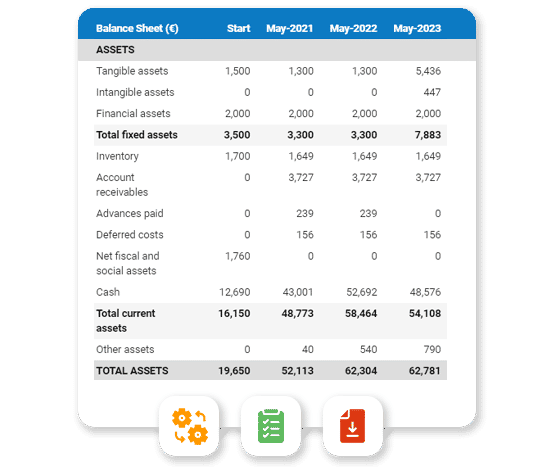
Just enter your data and let The Business Plan Shop crunch the numbers. We will tell if your business idea can generate profits and cash flows, and how much you need to get started.
What is the ideal founding team for my plant store?
The next step to opening your plant store, is to decide whether to assemble an ideal team or venture solo.
The failure rate for business start-ups is high: almost half don't make it past the five-year mark, and setting up a plant store is no exception.
Starting with a group of co-founders helps reduce this risk as each of you brings complementary skills and enables the financial risk to be spread on multiple shoulders.
However, managing a business with multiple partners comes with its own set of challenges. Disagreements among co-founders are quite prevalent, and they can pose risks to the business. That's why it's essential to carefully weigh all aspects before launching a business.
To help you think things through, we recommend that you ask yourself the following questions:
- Do you need more co-founders for this venture?
- Do you share the same vision and ambition as your potential partners for this project?
- What is your plan B?
Let's look at these issues in more detail.
Do you need more co-founders for this venture?
To answer this question you will need to consider the following:
- Are there any key skills missing for which you would rather have a business partner than recruit an employee?
- Do we have enough equity? Would the company benefit from more capital at the outset?
- Will the proposed number of founders make it easy to make decisions (an odd number of partners, or a majority partner, is generally recommended to avoid deadlock)?
In simple terms, co-founders bring skills, money, or both to the table. Having more partners is beneficial when there's a lack of either of these resources.
Do you share the same vision and ambition as your potential partners for this project?
One of the main sources of conflict between co-founders comes from a lack of alignment on the long-term vision.
To avoid any risk of disagreement, it is advisable to agree on ambitions from the outset and to provide an exit mechanism for one of the partners in the event of disagreement.
What is your plan B?
We hope your plant store takes off and thrives, but it's smart to have a "plan B" just in case things don't go as expected.
How you tackle potential failure can vary broadly depending on the type of co-founders (close friend, spouse, ex-colleague, etc.) and the personal circumstances of each of them.
For example, launching a family business with your spouse might seem exciting, but if it fails, you risk losing all of your household income at once, which might be stressful.
Likewise, starting a business with a friend might strain the friendship if things go wrong or if tough decisions need to be made.
Before diving in, make sure to thoroughly think about your choices. This way, you'll be ready for whatever might come your way when starting up.
Conducting market research for a plant store
The next step in launching a plant store is to carry out market research. Let's take a look at what this involves.
The objectives of market research
The objective here is very simple: to assess the level of demand for your business and whether there is an opportunity for it to thrive in your chosen location.
The first step will be to check that the market is not saturated with competing offers and that there is room for a new player: your plant store.
Your market analysis will also help you identify a concept and market positioning that has every chance of being successful in your target market, thereby helping increase your business's chances of success.
Carrying out market research for your plant store will also enable you to better understand the expectations of your future customers and the most effective ways to communicate with them in your marketing plan.
Analyse key trends in the industry
Your market research should start with an industry analysis in order to gain a good understanding of the main players and current trends in your sector.
Once you've delved into the current state of the market, it will be time to assess what proportion of your target market can be seized by your plant store. To do this, you will need to consider both the demand and supply side of the market.
Assess the demand
After checking out the industry, let's shift our focus to figuring out what your potential customers want and how they like to buy.
A classic mistake made by first-time entrepreneurs is to assess demand on the global or national market instead of concentrating on their target market. Only the market share that can be captured by your company in the short term matters.
Your demand analysis should seek to find answers to the following questions:
- Who are your target customers?
- How many are there?
- What are their expectations?
- What are their buying habits?
- How much budget do they have?
- What are the different customer segments and their characteristics?
- What are the main distribution channels and means of communication for reaching each segment?
The aim of the demand analysis is to identify the customer segments that could be targeted by your plant store and what products and services you need to offer to meet their expectations.
Analyse the supply side
You will also have to familiarize yourself with the competing plant stores on the market targeted by your future business.
Amongst other things, you’ll need to ask yourself:
- Who are the main competitors?
- How many competitors are already present?
- Where are they located?
- How many people do they employ?
- What is their turnover?
- How do they set their prices?
- Are they small independent businesses or national players?
- Do they seem to be in difficulty or are they flourishing?
- What is their market positioning?
- What types of products and services do they offer?
- What do customers seem to like about them?
The aim of the competitive analysis is to identify who your competitors will be and to gather information that will help you find a differentiating commercial positioning (more on that later in this guide).
Regulations
Conducting market research is also an opportunity to look at the regulations and conditions required to do business.
You should ask yourself the following questions:
- Do you need to have a specific degree to open a plant store?
- Do you need specific licences or permits?
- What are the main regulations applicable to your future business?
Given that your project is at an early stage, your focus should be to clear that there are no roadblocks from a regulatory standpoint before you deep dive into the planning process.
Once your project is more advanced, you will have the opportunity to talk about regulation more in-depth with your lawyer.
Concluding your market research
By the time your market research is completed, you should have either:
- Pinpointed an untapped business opportunity
- Or arrived at the realisation that the market is saturated, prompting the search for alternative business ideas or models.
If the conclusion is that there is an opportunity in the market to cater to one or more customer segments currently overlooked by competitors, that's great!
Conversely, if you come to the conclusion that the market is already saturated, don’t panic! The good news is that you won’t spend several years working hard on a project that has little chance of success. There is no shortage of business ideas either - at The Business Plan Shop, we have identified more than 1,300 potential business ideas!
Need a convincing business plan?
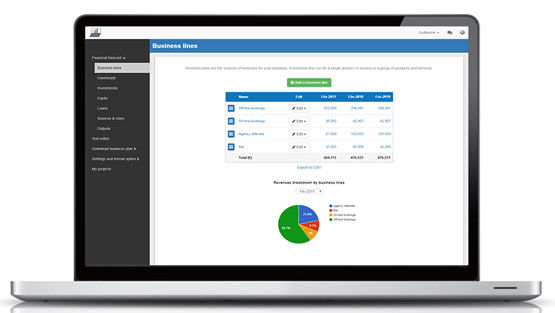
The Business Plan Shop makes it easy to create a financial forecast and write a business plan to help convince investors that your business idea can be profitable.
How should I position my plant store on the market?
The next step to start your plant store is to define precisely the market positioning your company will adopt in order to capitalise on the opportunity identified during your market research.
Market positioning refers to the place your product and service offering occupies in customers' minds and how they differ from the competition. Being perceived as a low-cost solution, for example.
To find a concept and a market positioning that will resonate with your customers, you need to address the following issues:
- How can you differentiate yourself from your competitors?
- Do you have the option of joining a franchise to reduce risk?
- Is it better to start or buy a plant store already in operation?
- How will you validate your concept and market positioning before investing in the business?
Let's look at these aspects in more detail.
How can you differentiate yourself from your competitors?
Opening a plant store means starting with a major disadvantage compared with competitors already active on the market.
While you will have to create everything from scratch, your competitors already have everything in place.
Your competitors' teams know the business well, whereas yours has only just been recruited, their customers are loyal and they benefit from word of mouth that you don't yet have.
So you're going to need a solid plan to succeed in taking market share from your competitors and making your mark.
There are a number of aspects to consider in order to try to avoid direct confrontation if possible:
- Can you target a different customer base than your competitors?
- Can you offer products or services that are different from or complementary to what your competitors already sell?
- How will your competitors react to your plant store entering their market?
- Can you build a sustainable competitive advantage that will enable you to compete with your current and future competitors?
Do you have the option of joining a franchise to reduce risk?
A proven way of reducing the risk of your business venture is to join a franchise.
Joining a plant store franchise means you don't have to start from scratch. You benefit from the brand recognition of a group and support with operational processes, relations with suppliers, recruitment, etc.
On the flip side, being part of a franchise will restrict your personal freedom, and you'll have to pay an entry fee and an annual royalty (typically a percentage of your sales).
Nevertheless, where possible, starting up as a franchise is generally a good way of reducing risks, especially if you're up against competitors with well-known brands.
Please note, however, that franchising opportunities vary from country to country and region to region, so there is no guarantee that you'll be able to find a franchise.
Is it better to start or buy a plant store already in operation?
The other alternative to setting up a new independent business is to buy out and take over a plant store already in operation.
Here too, a takeover is a good way of reducing the risk of your project compared with a pure start-up.
Taking over a business has two enormous advantages over setting up a new one: you start out on an equal footing with your competitors since you take over the team and the customer base, and you don't increase the supply on the market enabling you to maintain the existing balance on the market where the business operates.
However, as with franchising, the capital requirements for a takeover are higher because the business will have to be bought from its previous owners.
How will you validate your concept and market positioning before investing in the business?
However you decide to set up your business, you will need to ensure that there is a good fit between what you sell and what customers are looking to buy.
To do this, you'll need to meet your target customers to present your products or services and check that they meet their expectations.
Where should I base my plant store?
The next step in our guide on starting a plant store involves making a key choice about where you want your business to be located.
Picking the ideal location for your business is like selecting the perfect canvas for a painting. Without it, your business might not showcase its true colors.
We recommend that you take the following factors into account when making your decision:
- Visibility and foot traffic: A plant store relies heavily on walk-in customers. Therefore, a location with high visibility and foot traffic is crucial for attracting potential customers and increasing sales.
- Parking space, road and public transport accessibility: Many customers will need to transport their plants home, so a location with ample parking space and convenient access to roads and public transportation is important for the success of a plant store.
- Proximity to target customers: A plant store should be located in an area where the target customers, such as homeowners, gardeners, and plant enthusiasts, reside or frequent.
- Competitor presence: While some competition can be healthy, too many established plant stores in the same area can make it difficult for a new store to thrive. Therefore, it is important to consider the presence of competitors when choosing a location.
- Efficient logistics: For industrial plant businesses, having an efficient logistics system is crucial for the timely and cost-effective delivery of plants and materials.
- Storage space: A plant store requires ample storage space for plants, pots, and other gardening supplies. A location with enough storage space is necessary to ensure proper inventory management and organization.
- Availability of skilled labor: Plants require care and maintenance, so it is important to have access to skilled labor in the area. This can include horticulturists, gardeners, and other plant experts.
- Easy access to main roads: For a construction or transportation business, easy access to main roads is essential for efficient transportation of materials and products to and from the store.
- Climate and soil quality: Agricultural plant businesses need to consider the climate and soil quality of the location. A suitable climate and fertile soil are necessary for healthy and thriving plants.
- Adequate infrastructure: Agricultural plant businesses also require adequate infrastructure, such as irrigation systems and greenhouses, to support the growth and care of plants.
- Premises layout: For hospitality businesses, such as plant nurseries or garden centers, the layout of the premises is crucial for a pleasant customer experience. This can include designated areas for different types of plants, seating areas, and other amenities.
- Space to grow: For e-commerce or online plant businesses, having enough space to grow plants is essential for fulfilling orders and maintaining inventory.
- Demographic of local population: Understanding the demographic of the local population is important for all types of plant businesses. This can help tailor the products and services offered to better meet the needs and preferences of the target market.
This list is not comprehensive and will have to be adjusted based on the details of your project.
The parameters to be taken into account will also depend on whether you opt to rent premises or buy them. If you are a tenant, you will need to consider the conditions attached to the lease: duration, rent increase, renewal conditions, etc.
Lease agreements differ widely from country to country, so it's essential to review the terms that apply to your situation. Before putting pen to paper, consider having your lawyer look carefully at the lease.
Need inspiration for your business plan?
Avoid writer's block and draft your own business plan in no time by drawing inspiration from dozens of business plan templates.

Decide on a legal form for your plant store
It's now time to think about the legal structure for your plant store.
The legal form of a business simply means the legal structure it operates under. This structure outlines how the business is set up and defines its legal obligations and responsibilities.
What are the most common legal structures?
Naturally, the names and intricacies of business structures differ by country. However, they typically fit into two main categories:
- Individual businesses
- Companies
Individual businesses
Individual businesses are usually a good fit for self-employed individuals and freelancers who want limited administrative work. These types of entrepreneurs are commonly referred to as sole traders or sole proprietorships.
As mentioned above, the main benefit of being a sole trader is that minimal paperwork is required to launch and operate the business. Tax calculations are also relatively simple and annual accounts are not always required (and when they are, usually don't need to be audited) which saves a bit of time and money on bookkeeping and accounting fees.
Decision-making is also easy as the final decision is fully dependent on the sole trader (even if employees are hired).
However, being a sole trader also has drawbacks. The main disadvantage is that there is no separation between the individual running day-to-day operations and the business.
This means that if the business were to file for bankruptcy or legal disputes were to arise, the individual would be liable for any debts and their personal assets subsequently at risk. In essence, sole traders have unlimited liability.
This also means that profits earned by the business are usually taxed under the personal income tax category of the sole trader.
Another drawback is that sole traders might find it harder to finance their business. Debt (bank loan for example) is likely to be the only source of external financing given that the business doesn't have a share capital (effectively preventing equity investors from investing in their business).
Companies
Companies are more flexible and more robust than individual businesses. They are suitable for projects of all sizes and can be formed by one or more individuals, working on their own or with employees.
Unlike individual businesses, companies are recognised as distinct entities that have their own legal personality. Usually, there is also a limited liability which means that founders and investors cannot lose more than the capital they have invested into the business.
This means that there is a clear legal separation between the company and its owners (co-founders and investors), which protects the latter's personal assets in the event of legal disputes or bankruptcy.
Entrepreneurs using companies also gain the advantage of being able to attract equity investment by selling shares in the business.
As you can see companies offer better protection and more financing options, but this comes at a trade-off in terms of red-tape and complexity.
From a taxation perspective, companies are usually liable for corporation tax on their profits, and the income received by the owners running the business is taxed separately (like normal employees).
Normally, companies also have to produce annual accounts, which might have to be audited, and hold general assemblies, among other formalities.
How should I choose my plant store's legal setup?
Choosing the right legal setup is often simple once you figure out things like how many partners you'll have, if you hire employees, and how much money you expect to make.
Remember, a great business idea can work well no matter which legal structure you pick. Tax laws change often, so you shouldn't rely too much on getting specific tax benefits from a certain structure when getting started.
You could start by looking at the legal structures most commonly utilised by your competitors. As your idea evolves and you're ready to officially register your business, it's a good idea to confirm your choice using inputs from a lawyer and an accountant.
Can I switch my plant store's legal structure if I get it wrong?
Yes, you have the flexibility to change your legal setup later, which might include selling the existing one and adopting a new structure in certain situations. Keep in mind, though, that this restructuring comes with additional expenses, so making the right choice from the start is usually more cost-effective.
Can your business idea be profitable?
Just enter your data and let The Business Plan Shop crunch the numbers. We will tell if your business idea can generate profits and cash flows, and how much you need to get started.
Calculating the budget to open a plant store
The next step to opening a plant store involves thinking about the equipment and staff needed to launch and run your business on a day-to-day basis.
Each project has its own characteristics, which means that it is not possible to estimate the budget for opening a plant store without building a complete financial forecast.
So be careful when you see estimates circulating on the Internet. As with all figures, ask yourself these questions:
- Is my project similar (location, concept, size, etc.)?
- How recent is the information?
- Is it from a trustworthy source?
Startup costs and investments to open a plant store
For a plant store, the initial working capital requirements and investments may include the following elements:
- Store Fixtures and Displays: This includes items such as shelving units, display tables, and racks for holding and showcasing plants and other merchandise in your store.
- Greenhouse and Garden Structures: Investing in a greenhouse or other garden structure can provide a controlled environment for growing and nurturing plants, as well as a visually appealing feature for customers to enjoy.
- Landscaping and Outdoor Décor: Creating an inviting and beautiful outdoor space can attract customers to your store and enhance their overall shopping experience. This may include items such as outdoor seating, plants, and decorative elements.
- Equipment and Machinery: Depending on the size of your plant store, you may need to invest in equipment and machinery such as a forklift, garden tools, and irrigation systems to help with the maintenance and care of your plants.
- Point-of-Sale System: A reliable and efficient point-of-sale system is essential for any retail business, including a plant store. This includes hardware such as cash registers and barcode scanners, as well as software for inventory management and sales tracking.
Of course, you will need to adapt this list to your company's specific needs.
Staffing plan to operate a plant store
To establish an accurate financial forecast for your plant store, you will also need to assess your staffing requirements.
The extent to which you need to recruit will of course depend on your ambitions for the company's growth, but you might consider recruiting for the following positions:
Once again, this list is only indicative and will need to be adjusted according to the specifics of your plant store.
Other operating expenses required to run a plant store
You also need to consider operating expenses to run the business:
- Staff Costs: This includes salaries, wages, and benefits for all employees working in the plant store. This can also include training and development costs for staff.
- Rent: This is the cost of renting the physical space for your plant store. It may also include utilities such as electricity, water, and heating.
- Inventory: This includes the cost of purchasing plants and other products to sell in your store. It can also include the cost of packaging materials and storage fees.
- Marketing and Advertising: This includes the cost of promoting your plant store through various channels such as social media, print ads, and events.
- Accountancy Fees: You may need to hire an accountant to help you with bookkeeping, tax preparation, and other financial tasks for your plant store.
- Insurance Costs: This includes the cost of different types of insurance such as property insurance, liability insurance, and workers' compensation insurance.
- Software Licenses: You may need to purchase software licenses for programs such as inventory management, point of sale, and accounting software.
- Banking Fees: This includes the cost of maintaining a business bank account, as well as fees for transactions, wire transfers, and other financial services.
- Supplies: This includes the cost of purchasing office supplies, packaging materials, and other supplies needed to run your plant store.
- Repairs and Maintenance: This includes the cost of repairing and maintaining equipment and fixtures in your store, such as shelves, lights, and watering systems.
- Professional Services: You may need to hire outside professionals such as lawyers, consultants, or designers for specific tasks related to your plant store.
- Credit Card Processing Fees: If you accept credit card payments, you may need to pay fees to the credit card companies or payment processors for each transaction.
- Taxes: You will need to pay various taxes such as sales tax, property tax, and income tax for your plant store.
- Training and Development: This includes the cost of training and development programs for yourself and your staff to improve skills and knowledge related to running a plant store.
- Utilities: In addition to rent, you may also need to pay for utilities such as electricity, water, and gas for your plant store.
This list will need to be adapted to the specifics of your plant store but should be a good starting point for your budget.
How will I promote my plant store's?
The next step to starting a plant store is to think about strategies that will help you attract and retain clients.
Consider the following questions:
- How will you attract as many customers as possible?
- How will you build customer loyalty?
- Who will be responsible for advertising and promotion? What budget can be allocated to these activities?
- How many sales and how much revenue can that generate?
Once again, the resources required will depend on your ambitions and the size of your company. But you could potentially action the initiatives below.
Your plant store's sales plan will also be affected by variations in consumer demand, like changes in activity during peak holiday seasons, and the dynamics within your competitive environment.
Can your business idea be profitable?
Just enter your data and let The Business Plan Shop crunch the numbers. We will tell if your business idea can generate profits and cash flows, and how much you need to get started.

Founder & CEO at The Business Plan Shop Ltd